
LBL SKILLS
Awaab’s Law -Implementation
Why Awaab’s Law Training Matters
Awaab’s Law came into force on 27 October 2025. It places clear, enforceable duties on social landlords to investigate and repair reported damp, mould and other serious hazards within strict timeframes. Initially focused on damp and mould, the law will expand from 2026 to cover a wider range of housing hazards across the social and private rented sectors.
At LBL Skills, we help organisations move beyond awareness to confident, compliant practice.
Our Awaab’s Law – Implementation training explains what the legislation requires, how it amends existing repairing obligations, and what frontline teams, managers and contractors must do differently.
Through real case studies, practical scenarios and guided discussion, delegates learn how to triage reports, meet investigation and repair timescales, record decisions clearly and respond to residents in a way that is fair, transparent and defensible.
Our goal is to support landlords to keep residents safe, reduce complaints and ombudsman findings, and embed a culture of early action.
“This course provides a closer exploration of Awaab’s Law and what it means for landlords. It considers the phased implementation of the legislation and how internal policies and procedures need to be streamlined to meet requirements in all sectors, including social and private rented, across the home nations.” - The Housing Ombudsman

Need our help?
Please get in touch if you have any questions or need our advice.
01933 678110
Awaab’s Law – Implementation
Course aims
This course gives a clear, practical overview of Awaab’s Law and how it affects day‑to‑day practice for social and private landlords.
It explains the new legal duties, links them to existing repairing obligations and sets out what organisations must do to comply.
Delegates explore how internal policies, procedures and workflows need to be updated, and how different teams; housing management, repairs, contractors and complaint handlers, should work together to identify risks early and act within the prescribed timescales.
Learning outcomes
By the end of this course, delegates will be able to:
- Understand how Awaab’s Law amends existing repairing obligations and the timescales for reporting, investigating and commencing works.
- Distinguish between emergency, significant and lower‑level hazards, and know which issues now fall within the scope of Awaab’s Law.
- Identify the phases of implementation and the hazards included in the initial phase of the legislation.
- Analyse real‑life case studies of damp, mould and other defects, and understand how issues should be diagnosed, investigated and resolved.
- Handle complaints and expressions of dissatisfaction effectively within a social housing context, reducing escalation and ombudsman involvement.
- Understand the new report‑writing and record‑keeping requirements, and the logistics of making this work in a large organisation.
- Use structured case studies to discuss emergency cases and decide when a home can be made safe and when decant / alternative accommodation is required.
Awaab’s Law for Frontline Housing Staff
Course aims
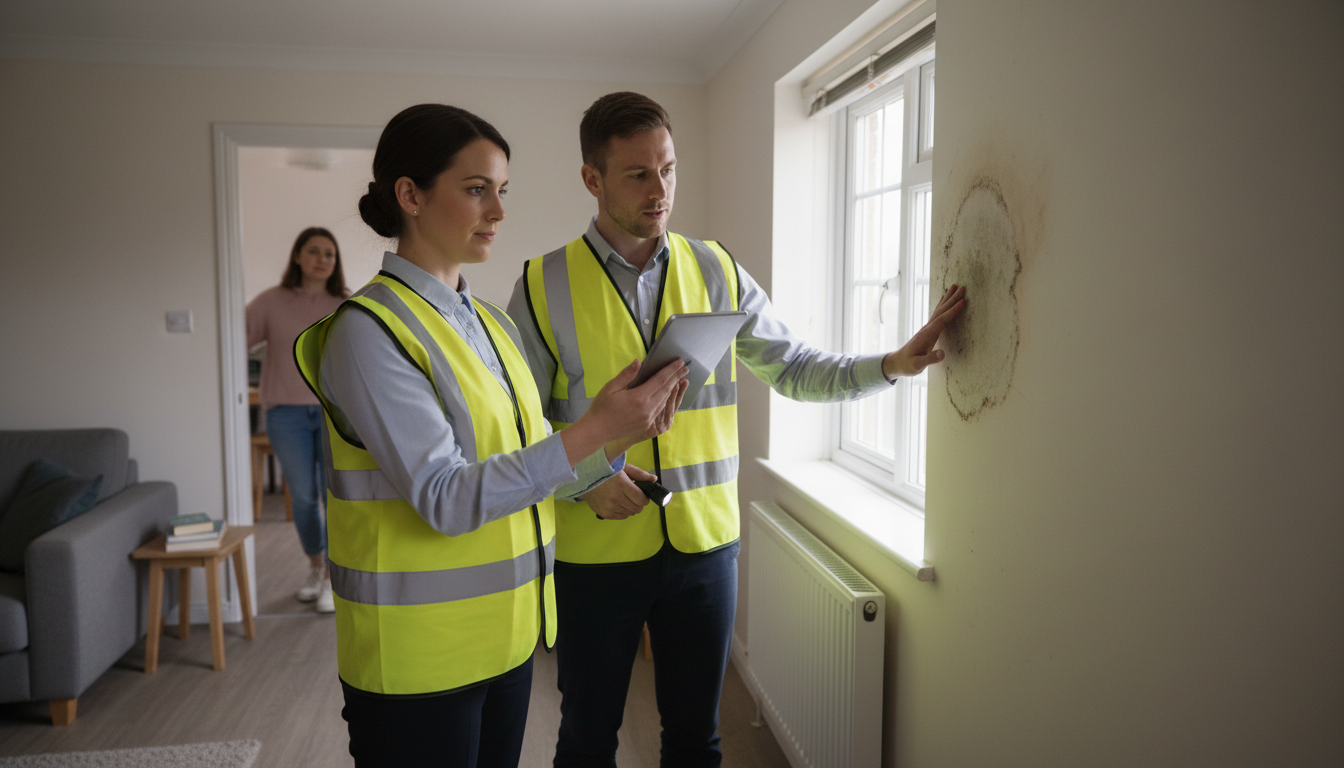
This course is designed for housing officers, neighbourhood staff, customer service teams and anyone who takes or responds to reports from residents. It focuses on recognising when Awaab’s Law applies, asking the right questions at first contact and ensuring that cases are triaged and escalated correctly.
Learning outcomes
Delegates will learn how to:
- Recognise when a report may fall under Awaab’s Law and gather the essential information at first contact.
- Explain clearly to residents what will happen next, including investigation and repair timeframes.
- Use simple triage tools to identify potential emergency situations and escalate them appropriately.
- Communicate effectively and sensitively with residents who are frustrated or anxious about damp, mould and disrepair.
- Record conversations, decisions and actions in a way that supports compliance and defends the organisation if challenged.
- Work collaboratively with repairs, surveyors and contractors to keep cases moving within required timescales.

Awaab’s Law for Repairs & Compliance Teams
Course aims
This course is aimed at surveyors, repairs supervisors, asset and compliance officers and contractors.
It focuses on diagnosing defects, prioritising works and ensuring that inspections, follow‑on jobs and remedial works all comply with the time limits set out in Awaab’s Law.
Learning outcomes
- Understand how Awaab’s Law interacts with existing repairs policies, voids standards and planned works programmes.
- Be able to assess reports and inspection findings to determine the level of risk and appropriate response time.
- Know how to structure inspection notes and technical reports so that decisions are clear and auditable.
- Explore case studies on damp, mould, ventilation and structural defects, and agree appropriate remedial solutions.
- Understand when temporary measures are sufficient and when a property remains unsafe, requiring decant or further urgent work.
- Identify where internal processes (diagnostics, follow‑on works, contractor management) may need to change to ensure compliance.

Awaab’s Law for Senior Leaders & Board Members
Course aims
This strategic session is designed for executive teams, senior managers and board members.
It focuses on governance, risk, assurance and culture, helping leaders understand their responsibilities under Awaab’s Law and how to gain meaningful assurance that their organisation is compliant.
Learning outcomes
- Understand the regulatory and reputational risks associated with failing to comply with Awaab’s Law.
- Be able to review policies, KPIs and performance reports to test whether the organisation is meeting statutory timescales.
- Identify the data, dashboards and qualitative information they need to gain assurance on damp, mould and wider hazards.
- Consider how to resource and support frontline, repairs and compliance teams to deliver the required standards.
- Explore lessons learned from case law and ombudsman findings and how these should inform governance and scrutiny.

Let’s make a call back request now.
Website Developed by Peak Media Marketing Web Development Services
© Copyright 2026. All Rights Reserved